
The best Japanese textbook for beginners — decided by your situation, not a ranking
Every ranking article lists twenty books. You need one — and three questions pick it.
The short version
Learn kana first — free, one or two weeks. Then: self-studying? Buy Genki I (¥3,600 + tax), the default for a reason. Learning with a teacher or school? Buy Minna no Nihongo I. And if you've opened a standard textbook before and bounced straight off it, Japanese From Zero! 1 ($39.99 list) is the ramp built for exactly that — slower, but designed to be finished alone. Any of the three finished beats the other two abandoned.
01
Before any book: kana (and the app trap)
Hiragana and katakana come before any purchase. Free flashcard drilling covers both scripts in one to two weeks, and the standard courses assume it: Genki keeps romaji only for its opening two lessons, and Minna's main text runs in Japanese script from lesson one. The exception is Japanese From Zero, which teaches the kana inside the course, volume by volume — if you'd rather have that taught with structure than drilled alone, that's one real reason to pick it (see 03).
The other thing to settle before buying: apps are not the course. The learner-community record on this is blunt — one widely upvoted report describes five to six years of daily Duolingo ending still below N5, with progress arriving only after switching to a textbook. Streaks measure opening the app, not learning the language. Use apps for kana and flashcards; put the curriculum in a book.
02
Self-studying (most people): Genki I
Genki I (3rd edition, 2020) is the default first textbook for self-studiers, and the boring reasons are the right ones: grammar explained in English on the page, a fixed lesson rhythm that tells you what to do next, and the largest ecosystem of companion material of any Japanese textbook — the university standard that later books and teachers calibrate against. Learner communities consistently report volume I alone reaching JLPT N5 pass range; completion reports run from six weeks to nine months, with the publisher's estimate cited in those threads at roughly 100–130 hours.
The honest caveat, straight from learner reports: Genki was written with a classroom in mind, and some solo learners open it and stall — one heavily upvoted December 2025 comment describes exactly that "I feel like I need a teacher" moment. The fix the community actually uses is pairing it with a free lesson-by-lesson YouTube walkthrough (ToKini Andy and Game Gengo are the standard names), and budgeting for the separate workbook (¥1,700 + tax). The pair-work exercises Genki assumes a classroom for have a cheaper answer than a language school too: occasional per-lesson conversation practice on italki or Preply. If the choice you're weighing is Genki against the classroom standard instead, that decision has its own page: the Genki vs Minna comparison.
03
Textbooks keep defeating you: Japanese From Zero
A recurring figure in beginner threads: the learner who bought Genki, burned out around chapter three, and concluded Japanese wasn't for them. Japanese From Zero! exists for exactly that person. It is built for solo study end to end: hiragana is taught inside Book 1, katakana in Book 2 and the first 100 kanji in Book 3 (per the publisher), the workbook and answer key are bound into each volume, and the author's official YouTube channel carries a free per-lesson video playlist for every volume of the series. The publisher's own site also mirrors the books as an online course with a script-display toggle — which answers the series' most famous criticism, the slow romaji-to-kana transition in the printed early chapters.
The trade-offs, stated plainly. It is slow by design: the community's own equivalence formula is that all five volumes ($199.95 at $39.99 list each) cover roughly the ground of Genki I and II (¥7,200 + tax for the pair) — around JLPT N4; the publisher itself makes no JLPT claim, and its own help page says as much. The gradual-romaji approach is genuinely polarizing — some learners credit it for keeping them in the language, others resent kana being dragged out. And learner reports from 2025 document editorial rough edges accumulating in the later volumes. As a first on-ramp, none of that outweighs the one thing this series reliably does: get textbook-averse beginners through a textbook. The full head-to-head — scope math, costs, the errata debate — is the Genki vs Japanese From Zero comparison.
04
You'll have a teacher: Minna no Nihongo
With a teacher, tutor or language school in the picture, the default flips to Minna no Nihongo I (3rd edition, 2025) — the standard classroom text across language schools, with an all-Japanese main volume (¥2,500 + tax) whose English explanations live in a separately sold Translation & Grammar Notes companion (¥2,000 + tax). In a classroom that architecture is a feature: the teacher supplies the context, the book supplies maximum Japanese. For self-study it's the harder road — the full trade-off, including what each path really costs, is the Genki vs Minna comparison.
05
Do you need a textbook at all?
Honest answer: no — a visible faction of successful learners skips course books entirely, working from a free grammar guide (Tae Kim's is the standard citation) plus early immersion, and the Japan Foundation publishes Irodori, a complete free downloadable beginner course, that almost no ranking article mentions. What a paid textbook actually buys you is sequencing and a finish line: a curriculum someone else ordered, exercises with answers, and a defined end that hands you to the next stage. Learners who thrive on self-assembled study genuinely don't need that. If you've read this far wondering which textbook to buy, you probably do — buy one of the three above and finish it.
06
Plan the exit before you enter
Every lane here is a multi-volume commitment, so know the road out. After Genki I comes Genki II (the second half of the syllabus, to roughly N4), then the intermediate junction — Quartet or Tobira. Minna graduates cross to the same junction. Japanese From Zero finishers report landing between N4 and N3 after Book 5, and the community routes them to that same Quartet-or-Tobira decision — all three lanes end at the same door. If an exam is the goal, the N5 guide and N4 guide will tell you the same thing this page does: the course book is the prep, so pick your lane and finish it.
Every book in this guide
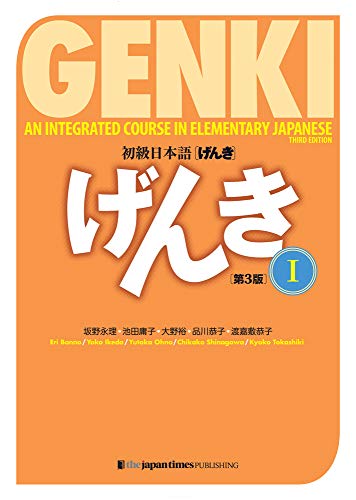 Genki: An Integrated Course in Elementary Japanese I — ¥3,600 + tax
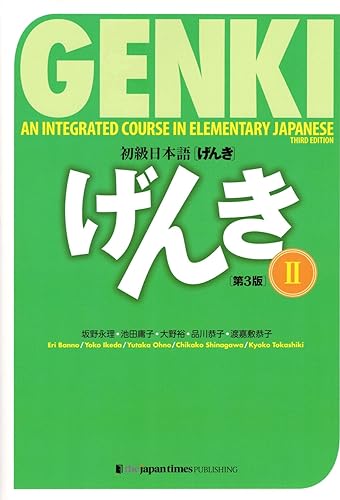 Genki: An Integrated Course in Elementary Japanese II — ¥3,600 + tax
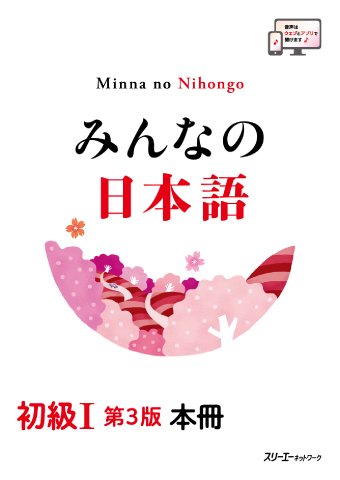 Minna no Nihongo Shokyu I — ¥2,500 + tax
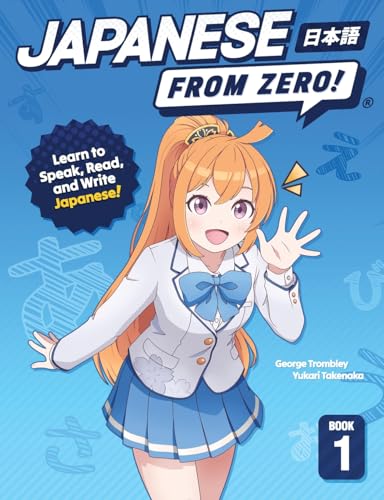 Japanese From Zero! 1 — $39.99 list
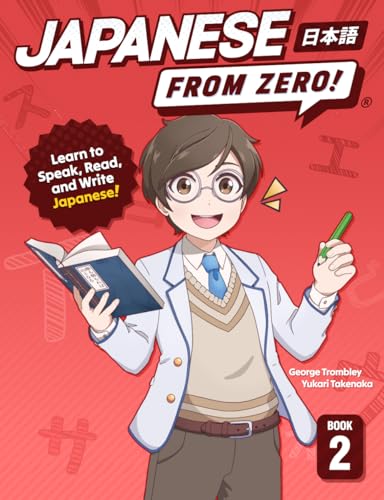 Japanese From Zero! 2 — $39.99 list
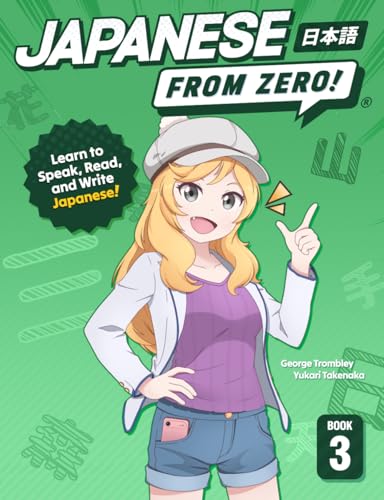 Japanese From Zero! 3 — $39.99 list
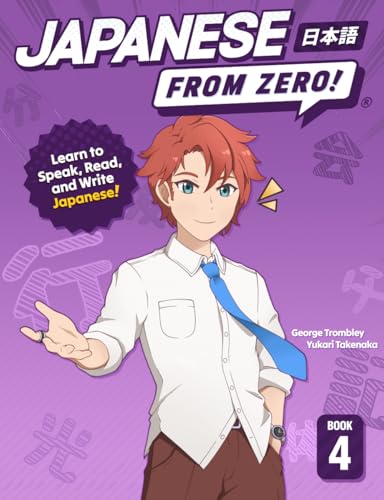 Japanese From Zero! 4 — $39.99 list
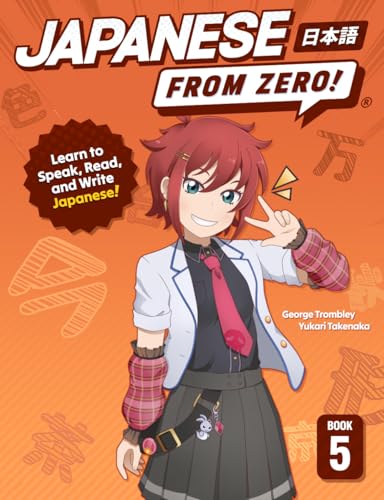 Japanese From Zero! 5 — $39.99 list
Sources
Editions, prices and page counts: NDL Search records for the Japanese-published titles, and the publisher's own catalog for Japanese From Zero — shop.fromzero.com, whose revision-dated listings are the authoritative record because library data for this publisher describes older printings under the same ISBNs. Course structure: GENKI 3rd Edition, Minna no Nihongo I 3rd Edition, and the JFZ volume descriptions; the JLPT non-claim is the publisher's own — its help page declines to map the series to the exam, and the free per-volume video playlists are on the official channel. Learner reports referenced above, all loaded August 2026: the Duolingo-regret and Genki-completion threads (r/LearnJapanese, Dec 2025), the "Genki or Japanese from Zero? Can it be both?" thread (r/japanese, Jun 2024), the JFZ online-version thread with the author's own confirmation (May 2023), and the JFZ errata thread (r/LearnJapanese, Mar 2025).