
The books you actually need for JLPT N4 (fewer than you think)
Spoiler: you probably own the main one already.
The short version
N4 tests the ground your beginner course covers — Genki I + II or Minna I + II is the main N4 book, and learner communities consistently report it alone reaches pass range. Finish it, then sit the Official Practice Workbook (¥700 + tax) timed, and let the score tell you whether you need one more book. Most people need at most one. Nobody needs the full drill stack.
01
You're working through Genki or Minna
Then the main purchase is behind you: keep going. The advice learner communities repeat across a decade of threads is that a finished beginner course puts you at pass range on N4 grammar — what it under-delivers is vocabulary volume and listening, and those are habits, not books: a daily flashcard routine and daily Japanese audio, started now, do more for your score than any purchase on this page. (Still choosing between the two courses? That's the Genki vs Minna comparison.)
Two honest options if you want paper for those habits: the Tango word list — though the community mostly studies it as its Anki deck — and the kanji volume learners call the best-laid-out at this level, which covers N5 and N4 in one book.
02
You finished the course — now what?
Calibrate before you buy. The Official Practice Workbook is one full test of real past questions from the exam makers, it costs ¥700 + tax, and one timed, scored pass tells you whether you need anything else at all. (Full honesty: the same contents are downloadable free from jlpt.jp — the printed book buys you the CD and the convenience.) The pass mark is 90 of 180, with minimums of 38 of 120 on language knowledge and reading combined, and 19 of 60 on listening.
If the mock shows grammar gaps — and learner reports do flag a handful of N4 points the beginner courses skip — TRY! N4 is the community's solo-study favorite: it teaches those points through reading and listening passages, with English explanations and downloadable audio. That's the whole default plan: one course you already own, one ¥700 calibration, at most one patch.
03
The exam is six weeks away
Six weeks is exactly what So-matome is shaped for — with one honest caveat from learner reports: at this level it reminds, it doesn't teach. That's the right tool for a finished course and the wrong one for an unfinished one. At N4 the series shrinks to two combined multilingual volumes: grammar–reading–listening on the daily calendar, and a kanji–vocabulary companion, with English and Vietnamese in print and six more languages by QR code. Keep the official workbook for a timed rehearsal in the final two weeks.
04
You want margin, not just a pass
Shin Kanzen Master does reach N4 — as six volumes, not the five most articles claim — and unlike its all-Japanese N1 and N2 sets, every N4 volume carries translations: English explanations in Grammar, English and Vietnamese elsewhere. It's the right series if you want headroom over the pass mark, and learner reports rank Grammar first among them. But the full set runs about ¥7,900 + tax, which is precisely why it isn't this page's default: buy a volume for a proven gap, not the series for reassurance.
One naming trap the series sets: Vocabulary (語彙) is a drill workbook, while Tango 1000 (単語) is the word list with glosses and app audio — different books for different jobs.
05
Listening is the section that fails people
Read any post-exam thread and one theme dominates: the listening section is where prepared candidates get shocked. The audio plays once, often over open-air speakers to a full room, at the end of the day — and it has its own minimum: 19 of 60, whatever your other scores. No book fully reproduces that; daily audio (podcasts made for learners, then the official workbook's CD under real timing) is the honest fix, started weeks out, not days. If self-discipline is the part that keeps failing, a standing weekly conversation lesson on italki or Preply is live listening you can't skip or replay.
If a mock shows listening genuinely failing, the one book with a community track record is Shin Kanzen Master N4 Listening — credited in learner threads for turning a failed listening section around, with a relisten-until-it-lands method, two CDs and free downloadable audio.
06
Is N4 worth sitting at all?
An honest split, reported as such. On résumés, learner consensus is blunt: employers and immigration channels care about N2 and N1, and an N4 certificate rarely moves either. But N4 has real uses the sceptics undersell: some scholarship and language-school applications ask for exactly it, student-visa paperwork can accept JLPT certificates as proof of prior study, and a booked exam is the strongest study motivator most self-learners ever find.
Skipping straight to N3 is allowed — levels have no prerequisite order — and the community's rule for the decision is refreshingly practical: sit a free timed N3 mock and let the score decide, rather than the calendar. One more honesty note that frames every book on this page: the JLPT has published no official vocabulary or kanji lists since 2010, so every "300 kanji, 1,500 words" figure — including the ones publishers print — is a third-party estimate. When you're ready for the next level, the N3 guide takes over.
Every book in this guide
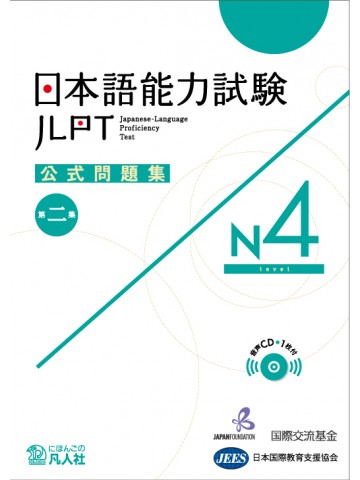 JLPT Official Practice Workbook N4 Vol. 2 — ¥700 + tax
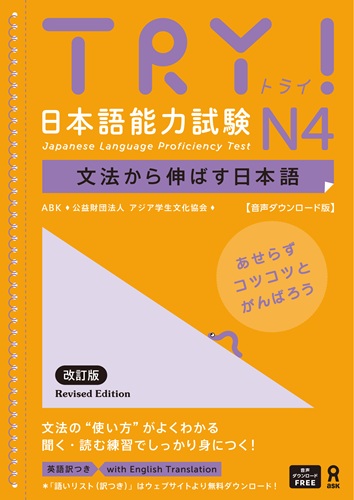 TRY! JLPT N4 — Japanese Through Grammar
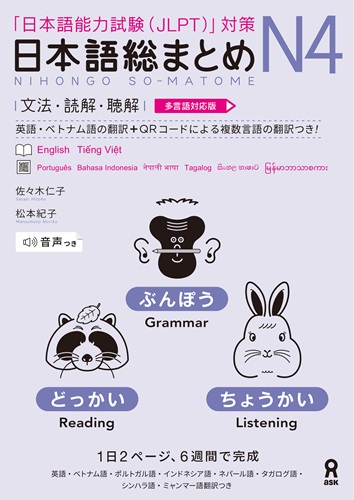 Nihongo So-matome N4: Grammar, Reading & Listening — ¥1,600 + tax
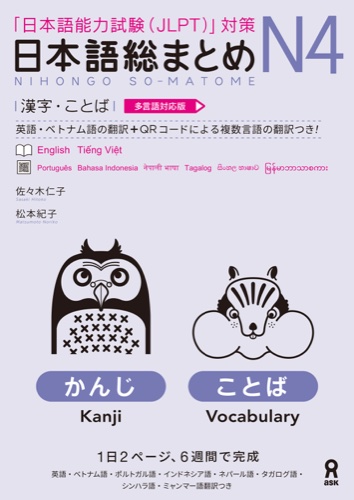 Nihongo So-matome N4: Kanji & Vocabulary
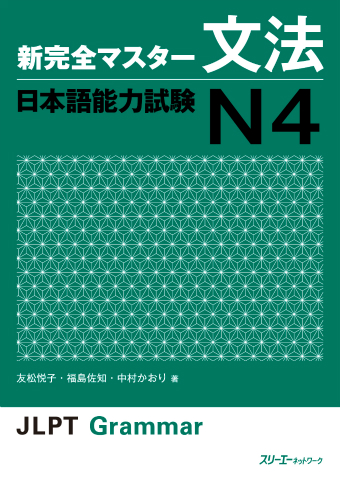 Shin Kanzen Master N4 Grammar — ¥1,200 + tax
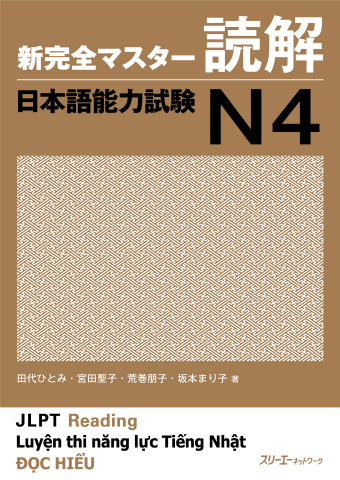 Shin Kanzen Master N4 Reading Comprehension — ¥1,200 + tax
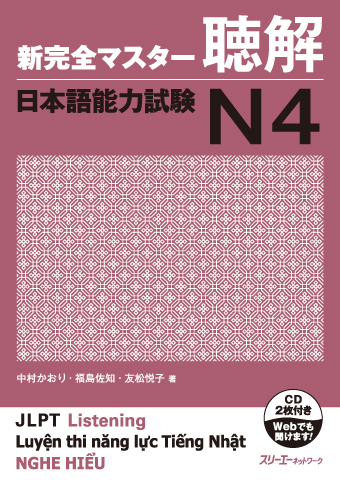 Shin Kanzen Master N4 Listening — ¥1,500 + tax
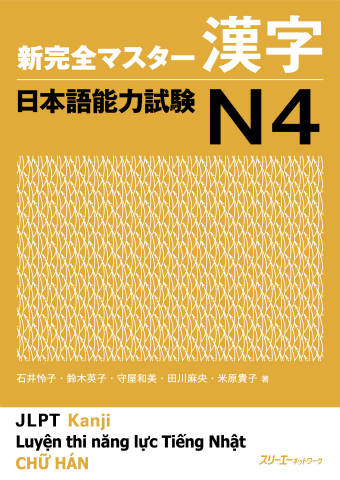 Shin Kanzen Master N4 Kanji — ¥1,200 + tax
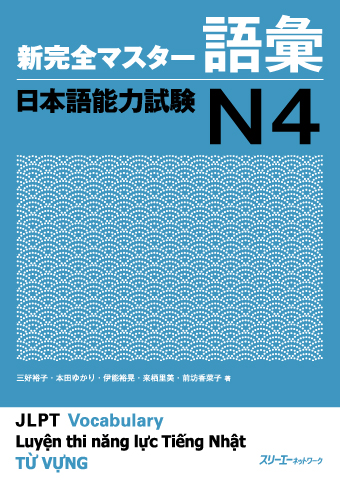 Shin Kanzen Master N4 Vocabulary — ¥1,200 + tax
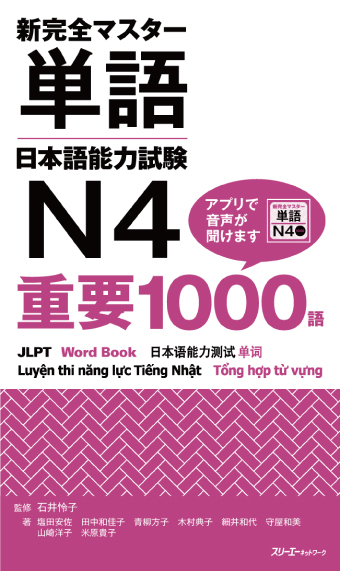 Shin Kanzen Master N4 Tango: 1000 Essential Words — ¥1,600 + tax
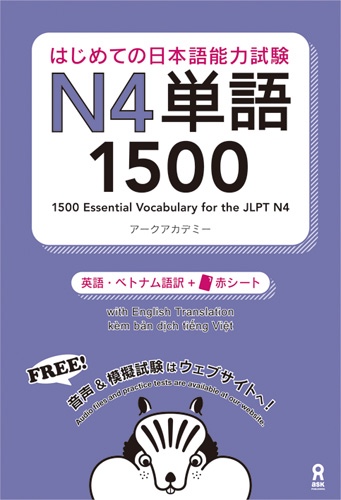 1500 Essential Vocabulary for the JLPT N4
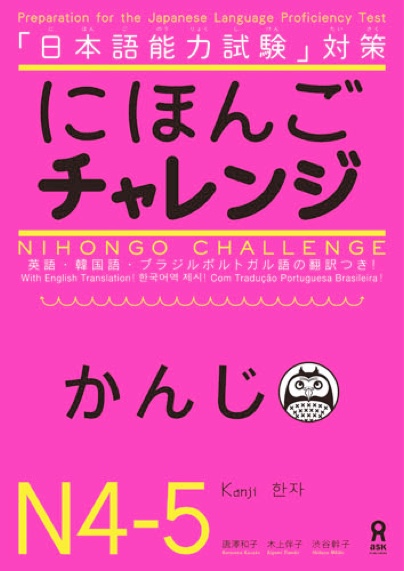 Nihongo Challenge Kanji N4–N5 — ¥1,300 + tax
Sources
Book structure and included materials are checked against the publishers' current product pages, including Shin Kanzen Master Grammar N4 (which lists its English-translated explanations), Listening N4 (with its free audio downloads) and Tango N4 1000, plus Ask Publishing's multilingual So-matome N4 and the TRY! N4 audio-download edition. Edition, page and Japanese list-price fields come from NDL Search. Pass marks and sectional minimums are taken from the official JLPT scoring page, section times from the test-sections page, and the Official Practice Workbook's free downloadable contents are on the official sample-questions page.