
Genki or Minna no Nihongo: which first textbook should you buy?
The internet's favorite beginner debate has a boring answer and an interesting reason. Both get you to the same place — the difference is where the English lives.
Verdict
Self-studying? Buy Genki I. The explanations are in English, on the page, exactly when you're stuck at 11pm with nobody to ask. Learning with a teacher or at a language school? Buy Minna no Nihongo — the teacher can supply the context the Japanese-only core leaves to its separate companion. Neither choice is a mistake; not finishing is the mistake.
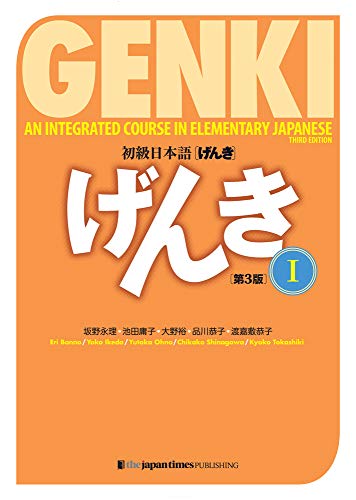
Genki I
初級日本語 げんき
The Japan Times · 3rd ed. 2020 · ¥3,600 + tax
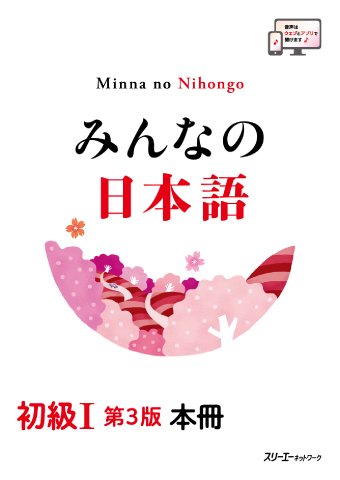
Minna no Nihongo I
みんなの日本語初級
3A Corporation · 3rd ed. 2025 · ¥2,500 + tax
The differences that matter
| Genki | Minna no Nihongo | |
|---|---|---|
| Explanations | English, printed in the book. Grammar notes sit next to the dialogues. | The main volume is entirely Japanese. English explanations are a separate book you must buy. |
| Structure & pace | 23 lessons across two volumes — bigger lessons, gentler slope. | 50 lessons across two volumes — shorter lessons, faster drum-beat, more drills. |
| Designed for | Beginners who want English explanations inside the core textbook. | Beginners using a Japanese-only core with language-specific notes alongside it. |
| Tone & content | Campus life: students, clubs, travel. Casual speech arrives early. | Adult and workplace life. Polite forms run longer before casual speech. |
| What you must buy | One book works alone; add the workbook for drills. | Two books minimum: the main volume plus the Translation & Grammar Notes. |
| Editions (2026) | 3rd edition (2020) — current, with app-based audio. | 3rd edition (2025) — current, with web/app audio and a separately sold English companion. |
| Publisher target | Book I targets JLPT N5 / CEFR A1; Book II targets N4 / A2. | Book I targets lower beginners, approximately JLPT N5, over about 150 hours. |
| Official extras | OTO Navi audio, apps, drills and a publisher-run self-study room. | Web/app audio plus separately sold workbooks and language-specific companions. |
What each path actually costs
Every comparison online says Minna "costs more" without doing the math, so here it is — Japanese list prices (before tax), verified against National Diet Library records, for a self-studier buying Book I:
The Genki I stack
The Minna I stack
Surprise: the "expensive" series is cheaper for a self-studier — Minna's two-book stack undercuts Genki's three-book one by about ¥1,600. Genki buys you convenience, not a lower bill. Across the full beginner course the counts flip the usual story too: Minna's complete self-study set is six purchases (two main volumes, two translation companions, two workbooks) against Genki's four. Store prices and international shipping vary, so these list-price totals are comparisons rather than checkout quotes.
Choose Genki if
Choose Minna no Nihongo if
What the publishers actually document
GENKI's official material says the series was built for beginning learners, places English explanations inside the course, and supplies app audio plus a publisher-run self-study room. Minna's publisher documents a different architecture: the third-edition main text is the Japanese core, while translated vocabulary and grammar explanations are sold in a matching companion. That structural difference — not an invented universal rating — is the basis of the recommendation above.
What comes after — plan the exit before you enter
A first textbook is a two-volume commitment either way, so it's worth knowing the road out. After Genki II, the natural next step is Quartet — same publisher, designed as its successor — or the tougher, immersion-heavy Tobira. After Minna II, schools typically continue into Minna's own intermediate volumes, and self-studiers usually cross over to Quartet or Tobira at that point anyway. Both roads land at the same intermediate junction.
Questions people actually ask
Is Genki (or Minna) enough for JLPT N5?
Do I really need the separate Translation & Grammar Notes for Minna?
Which editions should I buy in 2026?
Can I switch series halfway?
Do I need to know hiragana and katakana first?
Is 'An Integrated Approach to Intermediate Japanese' Genki 3?
The books
Sources
Edition, price and page data: NDL record for Genki I and NDL record for Minna no Nihongo I. Course structure and included materials: GENKI 3rd Edition, Minna no Nihongo I 3rd Edition, and its English Translation & Grammar Notes.