
The books you actually need for JLPT N1
And — because this is N1 — an honest accounting of what books can't do.
The short version
With six months or more: Shin Kanzen Master N1 Grammar and Reading — the two volumes N1 passers consistently credit — plus the Official Practice Workbook sat timed near the end. About ¥3,300 + tax for all three. With six weeks left, don't switch series: drill real questions and use So-matome as the review calendar. And at this level, no stack of drill books replaces reading real Japanese daily.
01
You just passed N2 (or nearly)
First, calibrate the jump. Learner reports agree on what makes N1 harder than N2, and it isn't the grammar: it's vocabulary volume and reading speed. The timelines passers describe run from a few months — for people already reading Japanese daily — to well over a year, so treat any fixed "X months to N1" promise with suspicion. (Still working toward N2? The N2 guide is the right page.)
Two books earn a place this early. Shin Kanzen Master N1 Grammar is the anchor: 157 tested grammar forms, per the publisher, grouped so that near-identical forms sit next to each other — which is exactly how the exam asks about them. If an all-Japanese textbook still feels like a wall, TRY! N1 teaches the same territory through reading and listening passages, with English support and downloadable audio. Everything else can wait until the exam is booked.
02
You have six months or more
With a real runway, the community verdict is unusually clean: the two volumes N1 passers credit again and again are Shin Kanzen Master Grammar and Reading. Grammar carries the language-knowledge section; Reading trains question-type strategy against exam-length passages and ends in a full mock reading section. Both are all-Japanese — unlike at N3, no volume in the N1 set carries translations — which at this level is less a barrier than a preview of the exam.
Listening is the honest asterisk. The Shin Kanzen volume teaches note-taking and prediction, but learner communities lean on timed past-paper audio for this section more than on any textbook — add the book for structure, not as the whole plan. And in the final two weeks, sit the Official Practice Workbook under exam timing: it is the only book of real past questions.
03
The exam is one or two months away
At N3 our short-runway advice is to switch to So-matome's daily calendar. At N1 the calculus flips: the material is too large to cram, so the highest-value hours go to timed passes through real questions. Start with the Official Practice Workbook, score it by section, and spend the remaining weeks on whatever bled points. The rule of thumb learner communities use: average around 120 of 180 on timed past papers before test day. (Honesty note: the workbook's contents are also downloadable free from jlpt.jp — the printed book buys you the CD and the convenience.)
So-matome still has a role here — as the review layer, not the teacher. Its daily two-page format with English, Chinese and Korean glosses is the right shape for checking ground you've already covered. What learner reports warn against is the inverse: at N1, finishing the So-matome set is not by itself a pass plan.
04
You only want to buy two books
Then buy the two with the highest score-per-page: Shin Kanzen Master N1 Grammar and the Official Practice Workbook. Grammar knowledge carries the language-knowledge section outright and gets retested at length in the reading passages; the official workbook calibrates everything else. Total: ¥1,900 + tax. If all-Japanese explanations stall you, TRY! N1 is the supported swap for the grammar slot.
05
One section is dragging you down
Target the single volume for that section instead of buying a series. The N2 and N3 rules still hold — vocabulary and kanji memorization go to So-matome's calendar even on a long runway — plus one N1-specific note: both series' kanji volumes are the ones learner communities rate most skippable at this level. By N1, kanji study is vocabulary study in disguise; buy a kanji book only if a mock exam shows those specific questions bleeding points.
06
The part no book covers
An N1 book list owes you this section. In the pass reports learner communities keep, the pattern is consistent: prep books are the last mile, not the engine. People have passed N1 with no prep books at all, on years of novels, essays and daily listening; people have also finished every volume of a major series and failed. What the books reliably do is convert existing reading ability into points — question formats, trap patterns, timing.
The engine itself is volume: novels and editorials for the reading section's speed, real audio — news, interviews, unscripted speech — for listening. Two verified numbers to plan around: the pass mark is 100 of 180, with 19 required in each of the three sections, so one collapsed section fails an otherwise strong exam. And the JLPT has published no official vocabulary or kanji lists since 2010 — every "2,000 kanji, 10,000 words" figure you'll see is a third-party estimate, which is precisely why reading widely beats memorizing any single list.
Every book in this guide
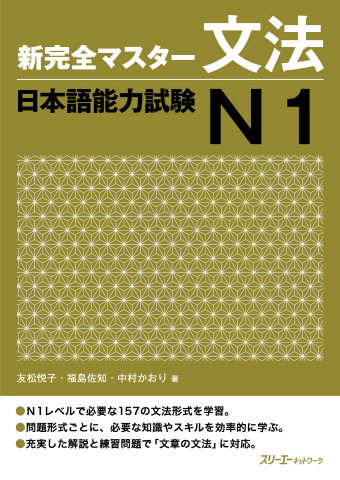 Shin Kanzen Master N1 Grammar — ¥1,200 + tax
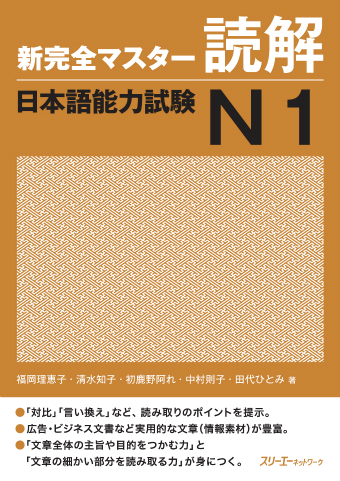 Shin Kanzen Master N1 Reading Comprehension — ¥1,400 + tax
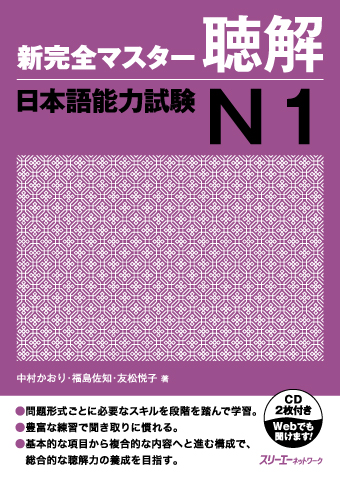 Shin Kanzen Master N1 Listening — ¥1,600 + tax
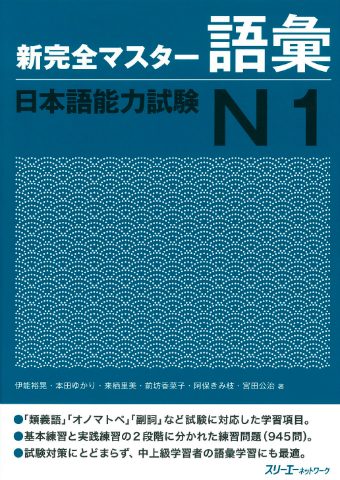 Shin Kanzen Master N1 Vocabulary — ¥1,200 + tax
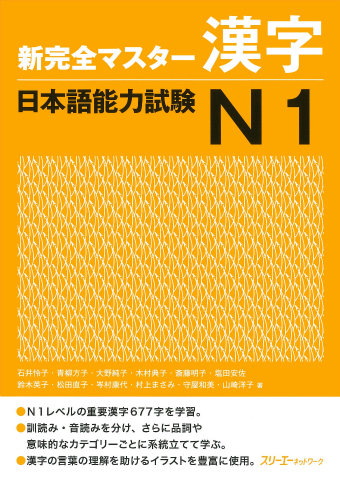 Shin Kanzen Master N1 Kanji — ¥1,200 + tax
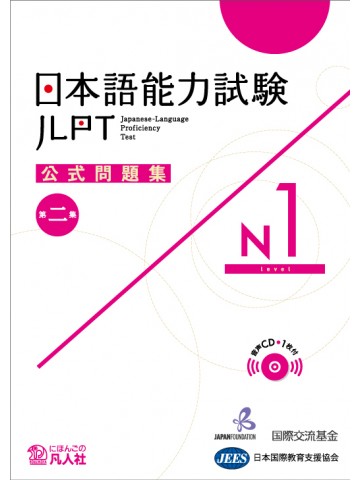 JLPT Official Practice Workbook N1 Vol. 2 — ¥700 + tax
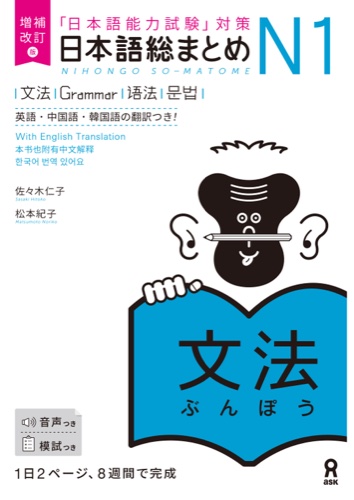 Nihongo So-matome N1 Grammar — ¥1,200 + tax
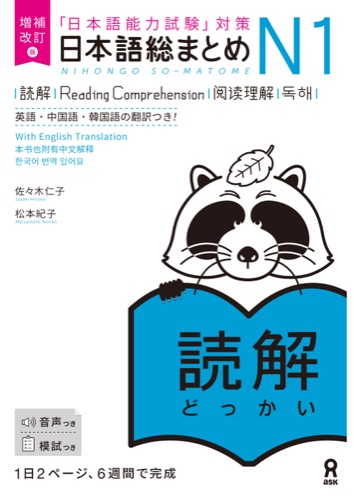 Nihongo So-matome N1 Reading Comprehension — ¥1,300 + tax
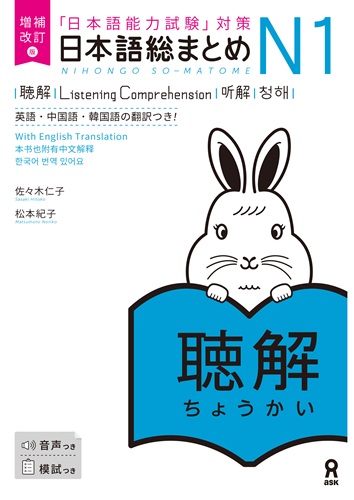 Nihongo So-matome N1 Listening
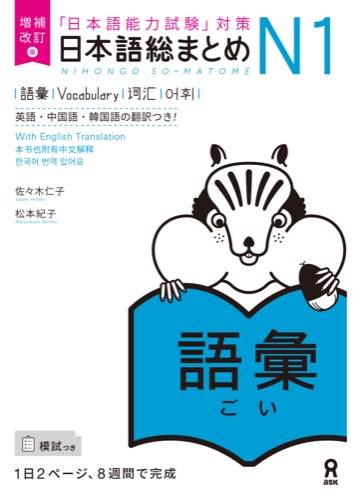 Nihongo So-matome N1 Vocabulary — ¥1,200 + tax
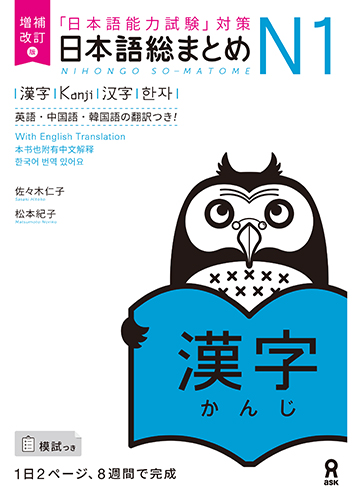 Nihongo So-matome N1 Kanji — ¥1,200 + tax
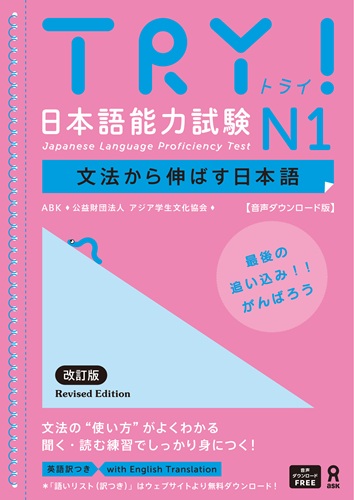 TRY! JLPT N1 — Japanese Through Grammar
Sources
Book structure and included materials are checked against the publishers' current product pages, including Shin Kanzen Master Grammar N1 (157 grammar forms; no translation support on any N1 volume), Reading N1 (with its mock reading section) and Listening N1, plus Ask Publishing's revised So-matome Grammar N1 (English, Chinese and Korean glosses) and the TRY! N1 audio-download edition (English version). Edition, page and Japanese list-price fields come from NDL Search. Pass marks and sectional minimums are taken from the official JLPT scoring page; the Official Practice Workbook's free downloadable contents are on the official sample-questions page.