
You finished Genki II — what comes next?
Two real candidates, one stale internet debate — and a Tobira rebuild that just became complete (September 2026).
The short version
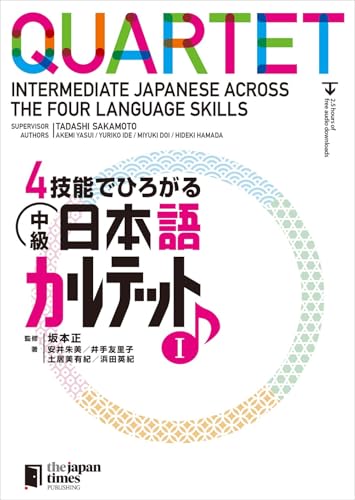
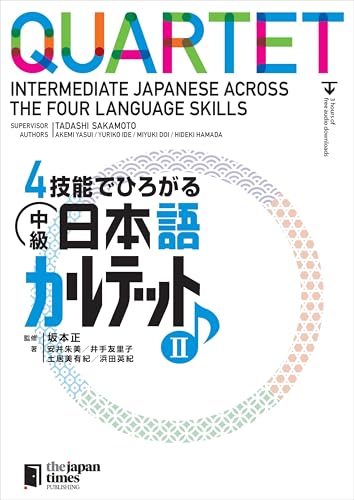
Self-studying? Buy Quartet I — Genki's own publisher, the same on-page English support, and a ramp designed for people coming straight out of Genki II. Choose Tobira if you want content-rich readings about Japan and don't mind losing the English safety net — and note that Tobira's gentler two-volume rebuild, which most guides still don't know exists, became complete with Tobira II in September 2026.
01
You're self-studying (most people)
Quartet is the closest thing to "Genki III" that exists: same publisher, grammar explained in English on the page, and a structure that assumes exactly what Genki II gave you. Volume I (six lessons) works the N3 band; Volume II (lessons 7–12) is centered on N2 per the publisher — together they carry you through the entire intermediate arc for ¥6,000 + tax.
Two honest caveats from learners who finished it: the speaking and writing sections assume a partner or teacher — solo, either treat them as reading material, or cover them with occasional conversation lessons on italki or Preply, where per-lesson marketplace pricing keeps it cheap. And the workbooks have no published answer key, so self-checkers should lean on the textbook exercises and the official OTO Navi audio app instead.
02
You want depth — or you're in a class
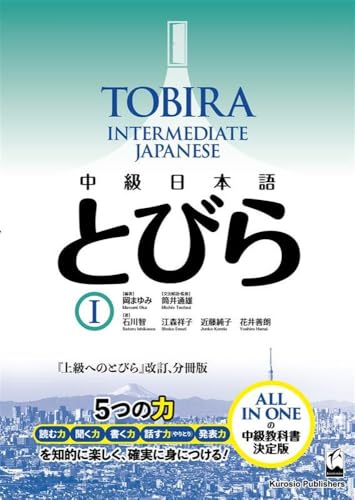
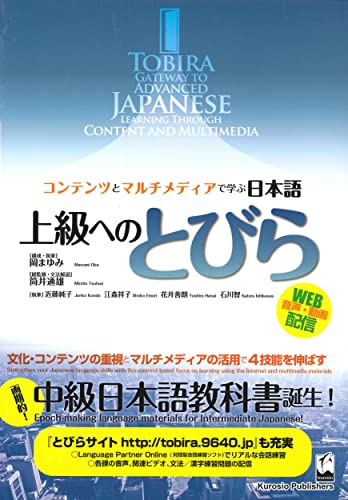
Tobira is the content-driven route: long readings about Japanese culture, history and society, with grammar notes that run a few English sentences and then trust you to work in Japanese. It covers roughly the same territory as both Quartet volumes in fifteen dense lessons — which is exactly why doing Tobira after Quartet II is redundant. Pick a lane.
The relaunch matters here — and as of September 2026 it is complete: Tobira I: Intermediate Japanese (中級日本語とびら) modernizes the readings, splits the long texts and softens the jump out of a beginner course (lessons 1–8, ¥2,600 + tax), and Tobira II (lessons 9–15, released September 10, 2026) finishes the arc. The rebuilt course no longer asks you to bet on an unfinished series.
03
Which Tobira? There are three
Retailers currently sell three different product lines called "Tobira", and they are not editions of each other. TOBIRA I/II: Beginning Japanese (2021–2022) is a Genki competitor — if you finished Genki II, it is behind you. Tobira: Gateway to Advanced Japanese (2009) is the classic single-volume intermediate text. Tobira I: Intermediate Japanese (2025) is the modernized, split rebuild of that classic. The after-Genki candidates are the last two — never the Beginning series, whatever a marketplace listing implies.
04
The real cliff, and how to prepare
The famous "intermediate cliff" is not grammar — learners consistently report the grammar gap between Genki II and either book is small. The cliff is vocabulary and reading volume: readings get several times longer while the word list stops being curated for you. The standard fix works for both books: pre-learn each chapter's vocabulary list before reading the chapter, and the texts shrink back to a manageable size.
Expect to know Genki's ~300 kanji going in, keep one grammar reference within reach, and plan your JLPT drills for after the course book is underway — an intermediate course builds the base faster than drill books at this stage. When you do reach exam season, the N3 guide takes over — and the N2 guide after it.
Sources
Positioning and structure are checked against the publishers' own pages: The Japan Times Publishing's Quartet I and Quartet II listings, Kurosio's official Tobira site and 2025 relaunch announcement. Editions, page counts and Japanese list prices are verified against NDL Search records.