
The books you actually need for JLPT N3
And — because N3 is the transition level — when a drill book is the wrong buy.
The short version
With three months or more: Shin Kanzen Master N3 Grammar and Reading, plus the Official Practice Workbook in the final two weeks — about ¥3,300 + tax for the set. Straight out of Genki II? A course book comes first: JLPT drill books review material, they don't teach it. And with only six weeks left, switch to So-matome's daily calendar.
01
You just finished Genki II (or Minna II)
N3 is the one JLPT level that sits in a gap: beginner courses stop below it, and the big intermediate textbooks climb through it. The advice learner communities repeat most consistently is that JLPT prep books — both major series — are review and exam-familiarity tools, not first-time teaching material. Starting them the week after Genki II usually means memorizing answers to questions you haven't learned to read.
So the first N3 purchase is a course book. Quartet I is the self-study default — same publisher as Genki, English explanations on the page, and its six lessons work exactly the N3 band (the After Genki guide covers the Tobira alternative). If you want a JLPT-shaped companion alongside it, TRY! N3 teaches grammar through reading and listening passages and is the volume learners call the friendliest of the N3 grammar options. Add drill books mid-course, once the exam is booked.
02
You have three months or more
With a real runway, buy the series that asks the most of you. Shin Kanzen Master mirrors the exam's question formats and explains why answers are right — and at N3 its biggest barrier is lower than most learners believe: per the publisher, the N3 Grammar volume carries English and Chinese translations, support that disappears from the series at N2.
The Reading volume is the series' standout at this level — the single most consistently praised N3 drill book in learner communities — and reading is where the language-knowledge section's grammar quietly gets retested. Add Listening if you are not hearing Japanese daily, and sit the Official Practice Workbook timed in the last two weeks: it is the only book of real past questions.
03
The exam is one or two months away
Six weeks is not enough time to work through Shin Kanzen Master honestly — and an unfinished rigorous book is worth less than a finished light one. Nihongo So-matome is built for exactly this: each volume is a printed daily calendar with English, Chinese and Korean glosses, so you never stall on an explanation. Learner reports are consistent about the trade-off: the explanations are thin, and the reading volume runs easier than the real exam. On this runway, that is a price worth paying.
Buy Grammar plus the volume for your weakest section — and if kanji is what lags (common straight out of a beginner course), make that the Kanji volume, the one book in the So-matome N3 set learners rate highest. Keep the Official Practice Workbook for a timed rehearsal.
04
You only want to buy two books
Then buy the two with the highest score-per-page: Shin Kanzen Master N3 Grammar and the Official Practice Workbook. Grammar knowledge carries the language-knowledge section outright and underwrites reading and listening; the official workbook calibrates everything else. Total: ¥1,900 + tax. If Japanese-first drilling still feels early, TRY! N3 is the supported swap for the grammar slot.
05
One section is dragging you down
Target the single volume for that section instead of buying a series. Two honest notes: for grammar that refuses to stick, TRY! N3 re-teaches it in context rather than drilling it — the right tool when the problem is understanding, not practice. And vocabulary or kanji memorization is the one case where So-matome beats Shin Kanzen even on a long runway: memorization wants a calendar, not rigor.
06
Wondering whether to skip N3 entirely
Nothing requires you to sit N3 before N2 — levels can be taken in any order. Two verified numbers frame the decision: N3's pass mark is 95 of 180 (with 19 per section), while N2's overall bar is actually lower at 90 of 180 — because the material is a full tier harder, not because the exam is kinder. And treat every "650 kanji, 3,750 words" checklist you see with suspicion: the JLPT has published no official vocabulary or kanji lists since 2010, so all such counts are third-party estimates.
The practical rule: sit N3 if a booked exam is what makes you study, if an employer or visa timeline values the paper, or if you want a calibrated midpoint reading. Skip it if the fee and travel outweigh those and you are already working comfortably through Quartet II or Tobira — in that case study at N3 but test at N2. Either way the prep books overlap more than the level labels suggest: learner reports note both major N3 grammar books over-cover into early-N2 territory, so nothing you drill here is wasted. When you're ready, the N2 guide takes over.
Every book in this guide
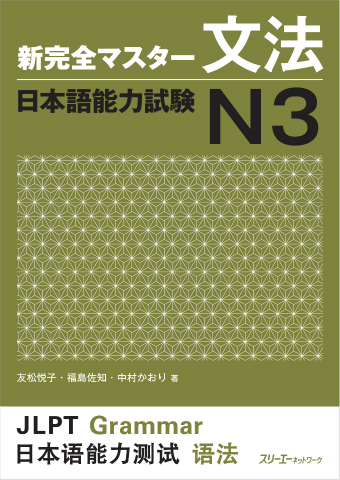 Shin Kanzen Master N3 Grammar — ¥1,200 + tax
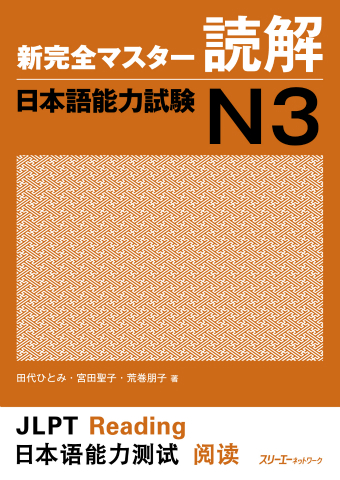 Shin Kanzen Master N3 Reading Comprehension — ¥1,400 + tax
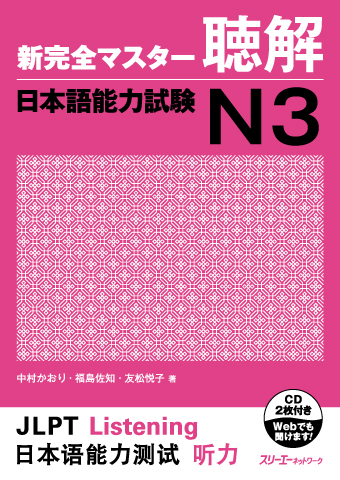 Shin Kanzen Master N3 Listening — ¥1,500 + tax
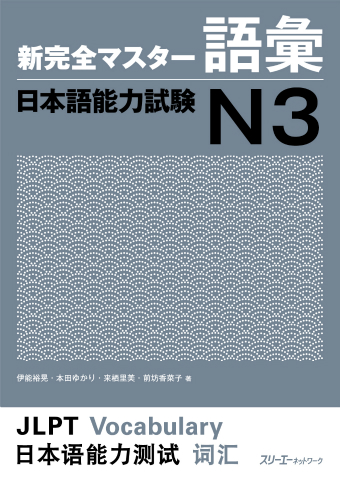 Shin Kanzen Master N3 Vocabulary — ¥1,200 + tax
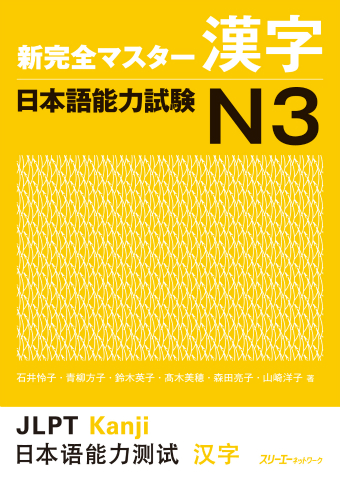 Shin Kanzen Master N3 Kanji — ¥1,200 + tax
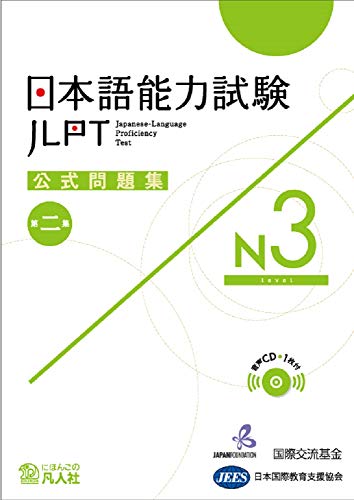 JLPT Official Practice Workbook N3 Vol. 2 — ¥700 + tax
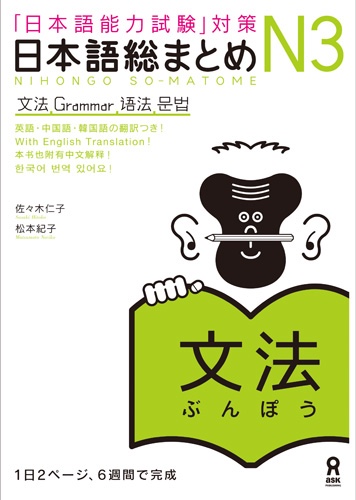 Nihongo So-matome N3 Grammar — ¥1,200 + tax
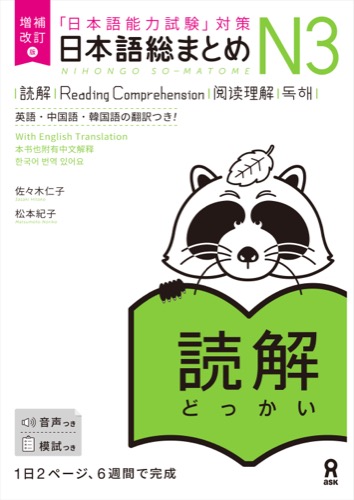 Nihongo So-matome N3 Reading Comprehension
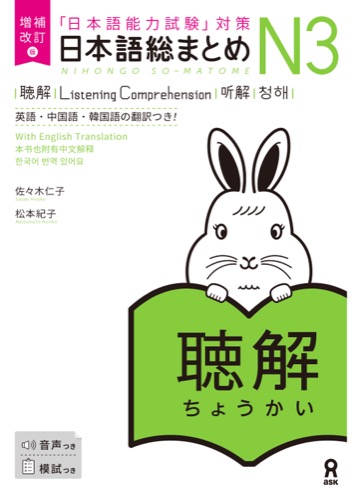 Nihongo So-matome N3 Listening
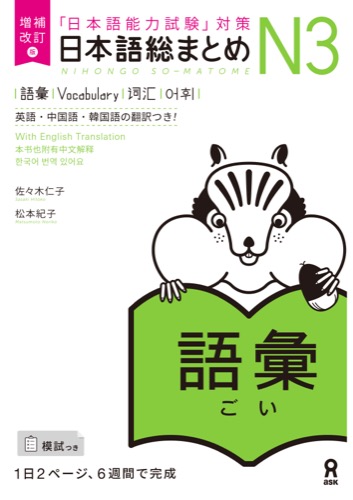 Nihongo So-matome N3 Vocabulary — ¥1,200 + tax
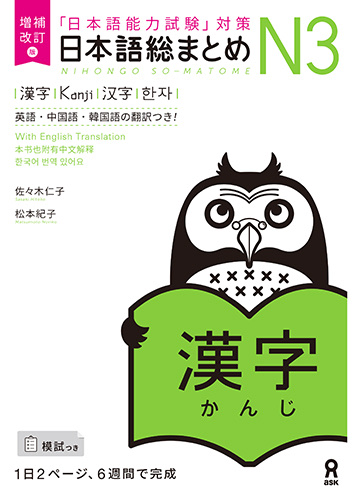 Nihongo So-matome N3 Kanji — ¥1,200 + tax
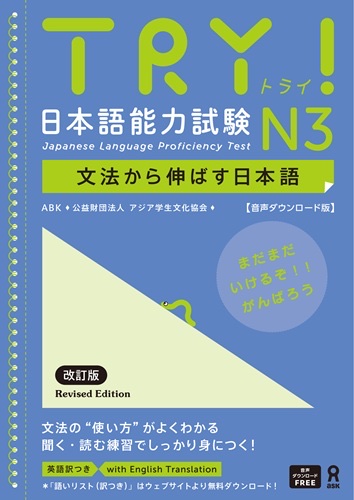 TRY! JLPT N3 — Japanese Through Grammar — ¥1,700 + tax
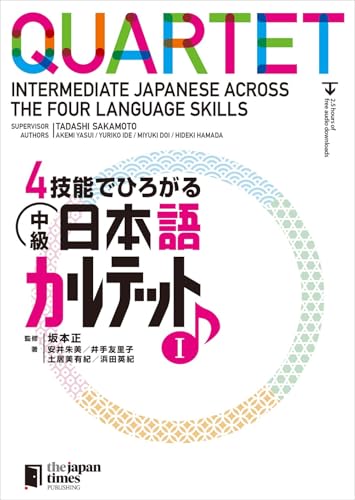 Quartet: Intermediate Japanese Across the Four Language Skills I — ¥3,000 + tax
Sources
Book structure and included materials are checked against the publishers' current product pages, including Shin Kanzen Master Grammar N3 (which lists its English and Chinese translation support), Reading N3, Listening N3, and Ask Publishing's revised So-matome Grammar N3 and TRY! N3 audio-download edition. Edition, page and Japanese list-price fields come from NDL Search. Pass marks and scoring sections are taken from the official JLPT scoring page, and exam-format references from the official sample questions.