
Tobira or Quartet: which intermediate textbook should you buy?
The internet has argued this one since 2019 — against a book that was just replaced. Updated for the Tobira II release, September 2026.
Verdict
Self-studying? Take Quartet. Clearer English grammar notes and the gentler ramp out of Genki. Choose Tobira if content-rich readings about Japan are what will keep you opening the book — and as of September 2026 that choice got easier: the modernized rebuild is complete, with Tobira II (lessons 9–15) joining Tobira I on shelves.
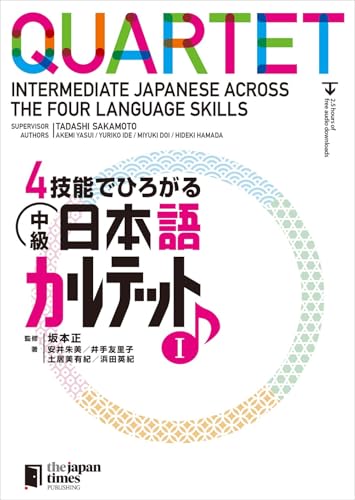
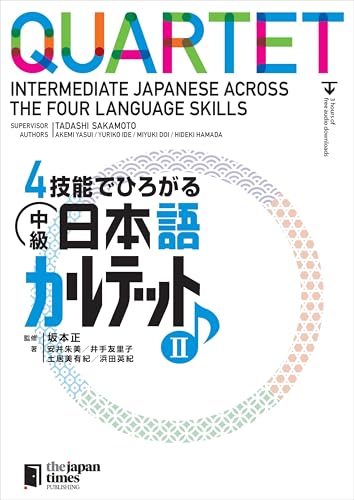
Quartet
中級日本語カルテット
The Japan Times · 2 volumes · ¥6,000 + tax the set
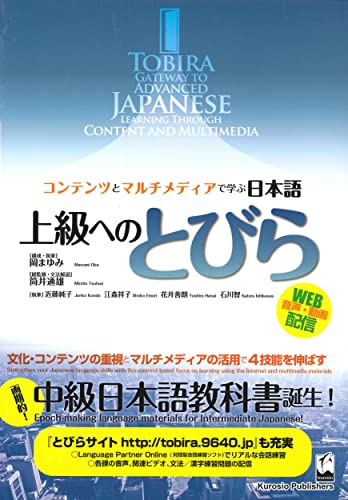
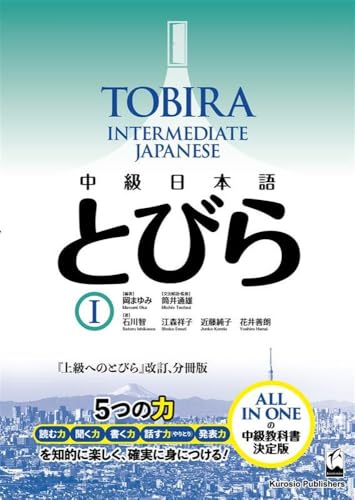
Tobira
上級へのとびら / 中級日本語とびら
Kurosio · classic 1 volume ¥3,300 · 2025 rebuild from ¥2,600 + tax
The differences that matter
| Quartet | Tobira | |
|---|---|---|
| Ramp from Genki | The smoothest continuation that exists — same publisher, Genki-style lesson structure, kanji picks up where Genki's stop. | Survivable but abrupt: no furigana crutch, unadapted readings, and grammar notes that trust you early. |
| Grammar explanations | The consistent community winner: detailed English notes for every one of its 120 patterns. | A few English sentences per point — learners routinely supplement with outside references. |
| Vocabulary & kanji | 657 kanji across both volumes, continuing from Genki; vocab lists run thin — plan a flashcard supplement. | The stronger vocab builder: 503 new kanji on ~300 assumed, with the heavier word lists to match. |
| Readings | Modern everyday topics; Volume II moves to unadapted real-world passages. | Long content-based readings on Japanese culture, history and society — the book's whole identity, dated in places (2009). |
| Exercises & answer keys | One exercise per grammar point; listening scripts and answers are public, but the workbook key was never published. | Harder quizzes that drill deeper; answer keys are teacher-only on the official site. |
| Audio & ecosystem | OTO Navi app audio, official online course, third-party video courses and SRS decks. | Companion website with audio, videos and free Anki decks — the strongest free web ecosystem of the two. |
| Level reached | Volume I ≈ N3; Volume II centered on N2 (the English marketing's N1 claim outruns the Japanese site). | Designed for the old Level 2 exam — roughly late-N3 into N2 territory in one volume. |
| State in 2026 | Complete and current: both volumes plus workbooks in print, unrevised since 2019–2020. | Relaunch complete: Tobira I (2025) covers lessons 1–8 and Tobira II (September 2026) lessons 9–15 — the two-volume rebuild now spans the classic's full arc. |
The "Tobira spike" myth, measured
The most repeated claim in this debate is that Tobira demands far more than Quartet. The publishers disagree: both series state the same entry point — roughly 250–300 hours of elementary study, i.e. finished Genki II — and Genki's 317 taught kanji cover Tobira's ~300-kanji assumption outright. What learners actually hit in Tobira's first chapters is a support gap: furigana disappears, readings arrive unadapted, and grammar notes run a few sentences where Quartet writes paragraphs. That gap is real, and it is also exactly what the 2025 rebuild was designed to soften — shorter readings, expanded explanations, modernized vocabulary.
Sequencing, settled
The default path is Quartet I → Quartet II → native material, adding JLPT drill books once an exam is booked. Swapping Tobira in as the whole intermediate stage works the same way. The popular hybrid — Quartet I, then Tobira — buys mostly review: learners describe Tobira as a denser pass over the same band Quartet covers in two volumes. And after either book, the consensus next step is not another textbook; it is real Japanese plus targeted exam prep. When you get there, the N2 guide is waiting.
Choose Quartet if
- You're self-studying and want English explanations that actually explain
- Genki's structure worked for you and you want more of it
- You want a complete, current set you can buy today
- Your goal is a steady N3 → N2 climb with app-based audio
Choose Tobira if
- Reading about Japan — history, society, culture — is what motivates you
- You're in a classroom, or have a teacher to lean on
- You want the heavier vocabulary and kanji build
- You're happy starting the 2025 rebuild with volume II landing late 2026