Genki 2nd vs 3rd edition: what actually changed, and which to buy
The rare edition question with an official answer sheet — the publisher published exactly what's different.
Verdict
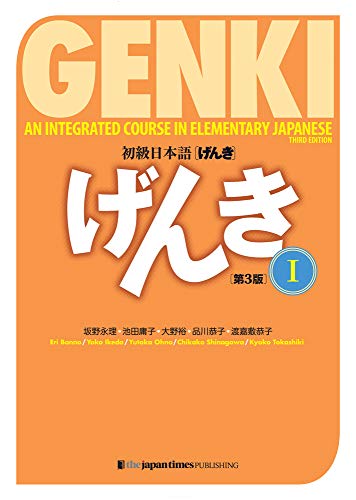
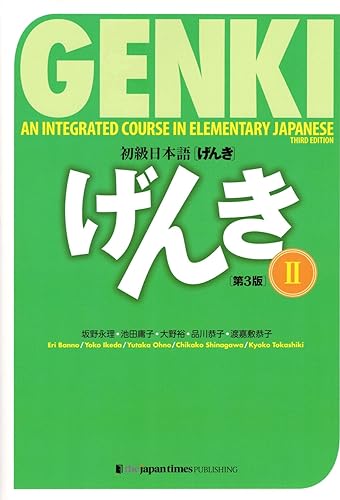
Buy the 3rd edition — new, or used from around $14 now that it's six years old. You get app audio, an in-print answer key and alignment with every current companion resource. A used 2nd edition only makes sense if it's near-free or already yours; the one override is a classroom syllabus, which you follow exactly.
What's officially identical
This isn't guesswork: The Japan Times published a "what's different and what's the same" sheet for the revision. Unchanged, in the publisher's own list — the 23-lesson structure, the lesson anatomy (dialogue, vocabulary, grammar, practice, culture notes),the grammar items, and the kanji taught in the reading-and-writing section. Even the page count held at 384. Everything a course or a study plan depends on carries over; what changed is packaging, vocabulary currency and how the audio reaches you.
The differences that matter
| 2nd edition (2011) | 3rd edition (2020) | |
|---|---|---|
| Audio | One MP3 CD-ROM (6 h 07 min) — dead media in 2026, often missing from used copies, and the publisher's app FAQ disclaims older titles. | 6 h 50 min in the free OTO Navi app, with speed control. No disc anywhere. |
| Vocabulary | 2011-era words — the publisher itself removed はがき, 切手, CD, 床屋 and friends in the revision. | カフェ, コンビニ, スマホ added; lists reordered by meaning-groups, so old vocab decks don't match the order. |
| Dialogues & readings | Includes scenes the publisher retired — asking a stranger for the time, booking flights at a travel agency, postcard writing. | Rewritten where life moved on; grammar coverage untouched. |
| Workbook alignment | Exercises are not keyed to grammar items — a 2nd-edition workbook does not track a 3rd-edition textbook. | Practices renumbered and keyed to grammar items; buy workbook and textbook in the same edition. |
| Answer key | Its key (978-4-7890-1447-2) is out of print with no reprint planned — a used set without it has no official self-check. | The ¥880 key covers both 3rd-edition volumes and their workbooks, and is in print. |
| Availability & price (2026) | Out of print. Used $11–31; leftover "new" stock at $67+ costs more than a new 3rd edition. | New ~$53–64 (¥3,600 + tax in Japan) — and used 3rd-edition copies now start around $14, which erases the used-2nd bargain case. |
The traps, named
Mixed-edition bundles are the big one: marketplace "Genki sets" routinely pair a 2nd-edition textbook with a 3rd-edition workbook, and buyers document the damage — the exercises stop lining up within a few lessons. Check the cover photo for "Third Edition", not just the listing title, because retailer pages under the old ISBN mix cover variants. And never pay new-book money for leftover 2nd-edition stock: remainder copies at $67+ cost more than a brand-new 3rd edition. Our edition tracker keeps this and the other known traps current.
Buy the 3rd edition if
- You're starting fresh — this is the default, no asterisks
- You want audio on your phone instead of a CD-ROM drive
- You'll self-study — the in-print answer key is the self-check
- You'll use current companion videos and SRS decks, which target the 3rd
A 2nd edition still makes sense if
- Your course syllabus lists it — buy the matched set it names
- It's already on your shelf — the grammar and kanji are identical, keep going
- It's near-free and you can live without official audio and answer key